

Tool Interface Preview
Shelf Life Calculator
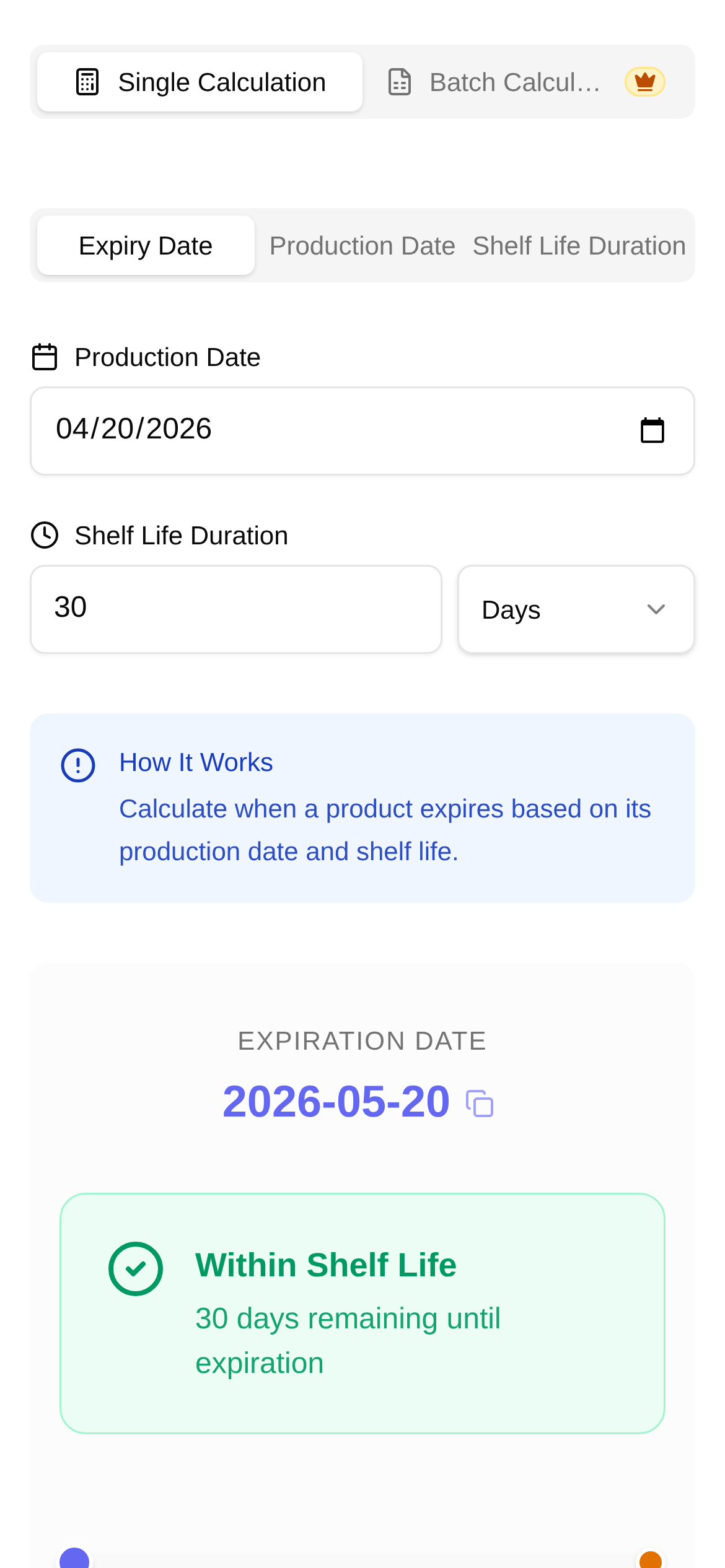
Are you always worrying about the expiration dates of the bottles and jars around your house? When face washes, condiments, or even batteries expire, do you throw them away immediately or think about "giving them another try"? Honestly, when things expire, it's not just about reduced effectiveness—there can also be hidden health risks. Today, let's talk about how to make these everyday items last a little longer. We'll also recommend a super practical tool to help you easily manage expiration dates, saving you both money and peace of mind!
Why Do Household Items Need Expiration Management?
Many people are highly sensitive to food expiration dates for fear of food poisoning. However, non-food daily necessities like cosmetics, cleaning agents, medications, and even batteries in electronics are often overlooked. In reality, they aren't "valid forever" and all have an optimal usage period. Expired products can suffer from degraded ingredients, significantly reduced effectiveness, and even bacterial growth, which can lead to safety issues.
For example, applying expired sunscreen offers almost no UV protection; expired medications may lose their efficacy or even cause toxic side effects; expired cleaning agents not only fail to clean properly but might also corrode your belongings. Therefore, understanding and properly managing the shelf life of household items is truly important for our quality of life and health safety.
Tips to Make Your Household Items Last Longer
We can't change a product's manufacturing date, but with a few simple tricks, we can help them "live" longer within their shelf life and avoid unnecessary waste.
- Proper Storage Environment: Most items need to be kept in a dark, dry, and cool place. Some skincare products must avoid direct sunlight and humidity, and some manuals even specify refrigeration—be sure to read them carefully. Once opened, food condiments are best kept tightly sealed to prevent oxidation and moisture.
- Maintain Cleanliness: For items that directly touch the skin, like makeup brushes and toothbrushes, regular cleaning can greatly reduce bacterial growth. When the brushes are clean, the products themselves will last longer.
- Divide Large Packages: If you buy items in bulk, you can transfer a small amount into a smaller container to minimize air exposure. This reduces the risk of spoilage. For instance, a large bag of laundry detergent can be poured into a sealed container with a lid.
- Note the Opening Date: Besides the "best before" date, many products have a "Period After Opening" (PAO), usually indicated by an icon showing "X months." Once opened, you need to calculate based on this PAO rather than just looking at the outer packaging's expiration date.
- Check Regularly: When you have free time, go through your cabinets and refrigerator to check the expiration dates of your items. Use up or dispose of things that are about to expire before it's too late.
Say Goodbye to "Expiration Anxiety": The Shelf Life Calculator is Here to Help!
With so many products filling up our homes, remembering every manufacturing and expiration date is a massive undertaking. This is where a practical tool comes in handy! I highly recommend trying the "Shelf Life Calculator" tool (https://www.toolkk.com/tools/shelf-life-calculator).
How to use this tool?
It's incredibly simple to operate, and even first-time users can get the hang of it quickly. It mainly has two core functions:
- Tells you when it expires: Just enter the product's manufacturing date and the shelf life in days (or months/years), and it will instantly calculate the exact expiration date.
- Checks if it's about to expire: If you only know the expiration date, enter it, and the tool will tell you if the item has already expired, is nearing expiration, and exactly how many days are left.
When should you use it?
- While shopping: Before buying bulk items, you can quickly calculate the expiration date to see if you can finish them in time.
- When organizing the fridge or cabinets: Do a quick sweep of your household items so nothing expires unnoticed.
- When dealing with near-expired goods: Promptly identify items nearing expiration so you can use them up or dispose of them, reducing unnecessary waste.
Step-by-step guide:
- Click this link to access the tool: https://www.toolkk.com/tools/shelf-life-calculator.
- Select "Calculate Expiration Date" or "Check Status" on the page.
- Depending on the function you chose, enter the manufacturing date, shelf life (days/months/years), or the expiration date.
- Click "Calculate" or "Query," and the results will appear instantly.
Who is this tool for?
Whether you're a homemaker who loves to shop, a single person who pays attention to lifestyle details, or even a merchant managing a small warehouse, this tool offers great convenience. It helps us manage items more scientifically, avoiding financial losses and health risks caused by expired products.
Frequently Asked Questions
Q1: Why do some products only have a manufacturing date and no clear expiration date?
A1: These are usually industrial products that don't spoil easily, such as certain electronics or tools. Such items generally don't have a strict "shelf life" concept, but rather a "design life" or "recommended service life." Even so, it's advisable to keep an eye on the manufacturing date, as prolonged storage might affect performance or cause material aging.
Q2: What if I select the wrong shelf life unit when using the Shelf Life Calculator?
A2: The tool offers three units: days, months, and years. Make sure to choose the one that matches the label on the product packaging. If you select the wrong unit, the result will be inaccurate. For example, if a product has a shelf life of "12 months," you must select "months" and enter "12."
Q3: Can I still use things that are about to expire?
A3: For food, near-expired products are generally safe to eat within the shelf life, though the taste and nutritional value might decline slightly. For non-food products, nearing expiration usually means the effectiveness may start to weaken, but they don't instantly become useless. Whether to continue using them depends on the specific product and your judgment. We recommend carefully checking for any abnormalities (like changes in smell, color, or texture). If you're unsure, it's best not to use it just to be safe.
Q4: How is this Shelf Life Calculator different from other tools?
A4: Its main advantage is a highly clean and intuitive interface dedicated solely to calculating shelf life. There are no annoying ads or complicated settings, making it incredibly fast and perfect for quick daily checks. Plus, it supports multiple shelf life units, making it highly adaptable.
Let's Make Life More Organized!
Properly managing the shelf life of household items isn't just about saving money; it's also about our health and safety. By mastering the tips above to extend product lifespans and using a handy tool like the Shelf Life Calculator, we can make our lives more organized, say goodbye to "expiration anxiety," and comfortably enjoy our home life!