

Tool Interface Preview
Random Spain Address Generator
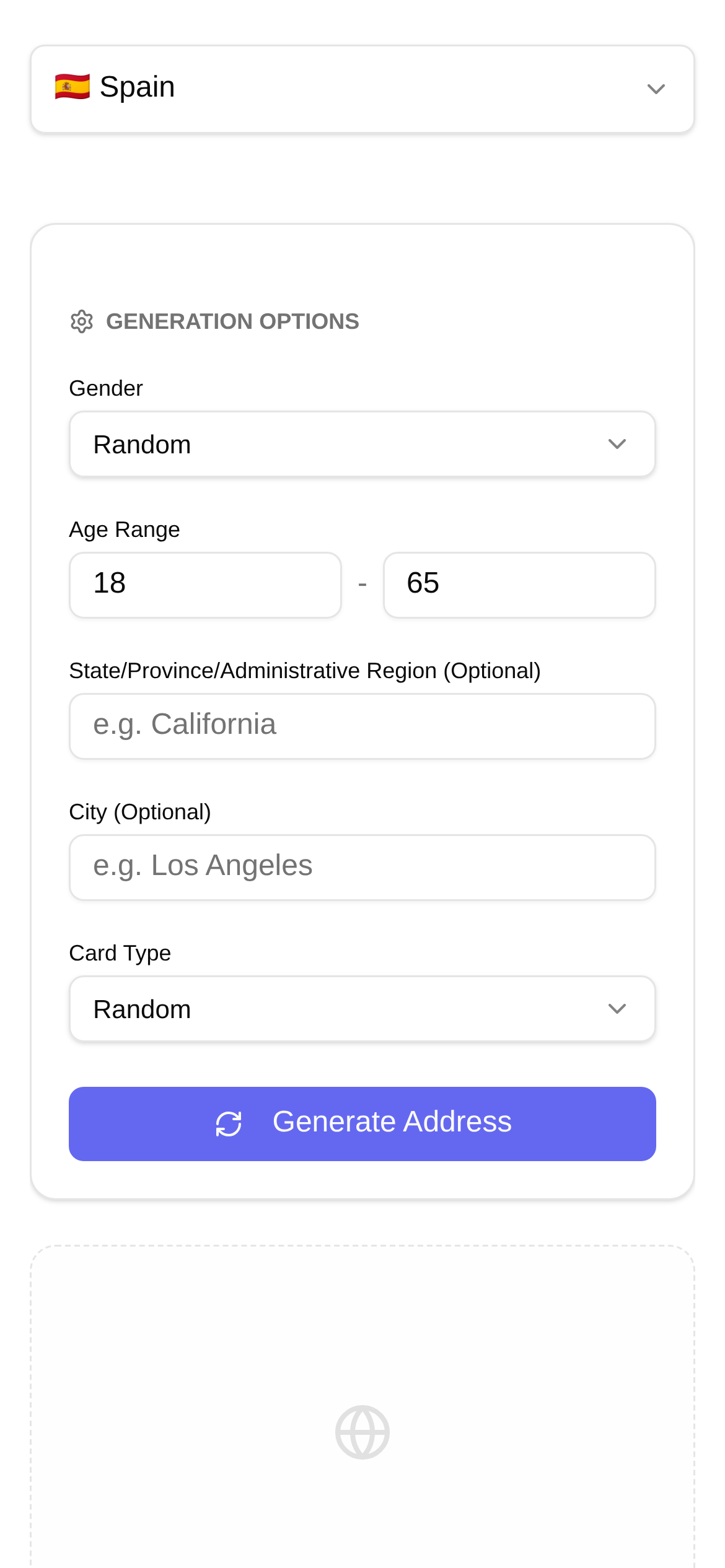
Developing internationalized applications makes handling address data a meticulous task. This is especially true for Spain, where the unique address formats and detailed administrative divisions often leave developers scratching their heads. Incorrect addresses can lead to minor issues like failed deliveries and poor user experience, or major problems like skewed data analysis and potential compliance troubles.
Spain Address Validation: Why You Can't Afford to Be Careless
The way addresses are written in Spain differs from what many of us are used to in other countries. Typically, it includes the street type (like Calle or Avenida), followed by the street name and building number. Some also include the floor and specific door number, followed by the postal code, city, and province. Not to mention, certain remote areas or special addresses might have additional descriptions. If these addresses aren't properly validated, a pile of problems can arise:
- Failed Deliveries: A single mistake in the postal code or street information, and the package goes MIA.
- Frustrated Users: If users face hurdles when entering their address, or if subsequent services are cut off due to an incorrect address, satisfaction levels will plummet.
- Messy Data: When dirty data sneaks into your database, any data analysis, marketing campaigns, or business decisions you try to make could be led astray.
- Compliance Risks: In industries like finance and e-commerce, customer address accuracy is a strict regulatory requirement. Failing to meet these standards can lead to serious trouble.
What Exactly Does Spain Address Validation Entail?
A reliable Spain address validation solution basically needs to have these core features:
- Format Checking: Ensuring the address follows basic Spanish formatting rules.
- Data Cleansing: Removing extra spaces and punctuation, and standardizing capitalization.
- Typo Correction: Automatically correcting common spelling errors or abbreviations.
- Postal Code Matching: Verifying that the postal code matches the corresponding city and province.
- Smart Autocomplete: Providing complete address suggestions as the user types.
- Geocoding: Converting addresses into latitude and longitude coordinates for map display or spatial analysis.
However, implementing all these features is quite challenging. Are the data sources reliable? The language itself is complex, and administrative divisions change from time to time. For us developers, building a complete validation system from scratch is not only time-consuming and labor-intensive, but it also might not end up being professional-grade.
How Can Developers Easily Handle Spain Address Validation?
To help everyone quickly get Spain-formatted address data during the development and testing phases, I highly recommend a tool: the Random Spain Address Generator. This tool generates highly realistic virtual addresses, saving you the hassle of preparing test data yourself. Not only does it provide basic information like street, building number, city, province, and postal code, but it also simulates the diversity of real addresses. It's an absolute must-have for functional testing, performance testing, and data population.
What Can the Random Spain Address Generator Be Used For?
- Development and Testing: During development, you need a large volume of realistic Spain address data to test your form validation logic, address storage, and display features. Using this saves you from manually typing out a bunch of fake addresses.
- Data Population: When mocking user data or populating a database, this generator provides structured addresses that align with real-world scenarios.
- International App Demos: When showcasing your internationalized app features to clients or your team, filling sample data with generated addresses makes it look much more authentic.
- How to Use: It's super simple. Just click the link and hit the generate button.
- Who It's For: Anyone dealing with Spain address data—whether you're a developer, QA engineer, or data analyst—will find this useful.
Step-by-Step Guide:
- Open the Tool: Enter this link in your browser: https://www.toolkk.com/tools/random-spain-address-generator.
- Click Generate: The page is very clean and usually features a prominent "Generate" button. Just click it.
- Get the Address: With every click, the tool gives you a brand-new, properly formatted virtual Spain address, complete with street, building number, postal code, city, and province.
- Copy and Paste: Simply copy the generated address and paste it into your development environment, test cases, or data population scripts.
FAQs and Things to Note:
- Are the addresses real? Remember, these addresses are "virtual." While the format is highly realistic and follows Spain's administrative logic, they are not actual residential or commercial addresses. So don't use them to mail a letter!
- How often is the data updated? Generators like this typically update based on the latest administrative divisions and postal code data. However, if you have strict requirements for data timeliness, it's best to combine this with an official API for secondary validation.
- Difference from professional validation services: This tool is primarily for generating test data, not for real-time address validation. If you need online validation, address autocomplete, or geocoding, you might want to consider integrating a professional third-party address validation API, like the Google Geocoding API or other specialized services.
- Compared to other tools: Compared to manually making up addresses or using generic random string generators, the advantage of this tool is that the generated addresses are accurately formatted, highly localized, and better reflect actual conditions in Spain, allowing you to simulate real-world scenarios more effectively.
Wrapping Up
Nailing Spain address validation is no small feat in internationalized app development. We need to understand why it's important, master the core validation features, and make good use of auxiliary tools like the Random Spain Address Generator mentioned earlier. By doing so, we can significantly boost our work efficiency, ensure more accurate data, and ultimately provide a better service to our users. Don't forget: data quality is the cornerstone of a successful product!
Friendly Reminder: The information in this article is primarily for reference and learning purposes. When it comes to a real production environment—especially when handling sensitive data or dealing with legal compliance—be sure to consult a professional address validation service provider or legal advisor.