

Tool Interface Preview
Random Chinese Address Generator
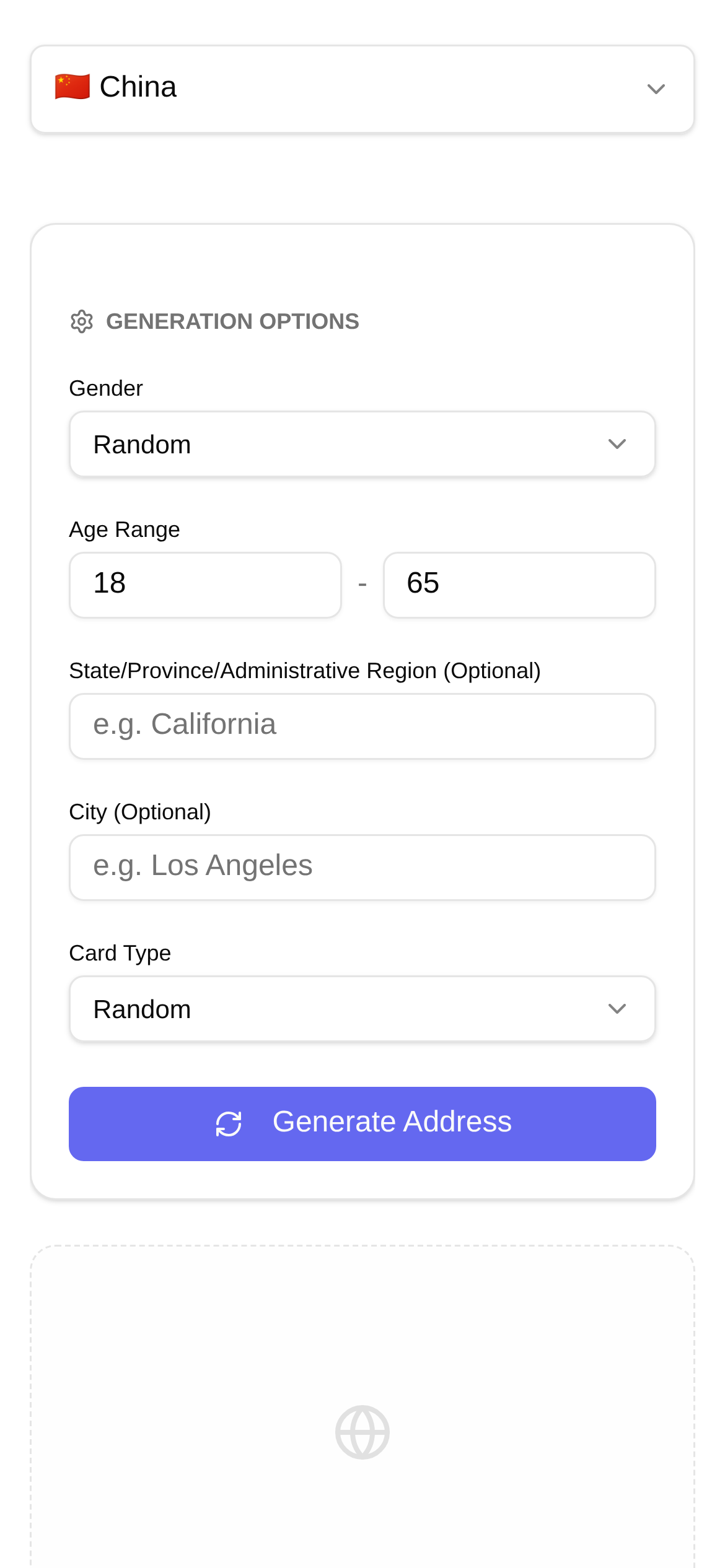
Have you ever experienced this? You're registering for an online service, testing a new software feature, or just filling out a survey, and it forces you to enter an address. You hesitate because you really don't want to hand over your real address—what if your information gets sold or you start getting spammed? But you can't find a suitable "shield." Don't worry, I recently discovered an interesting little tool that solves this exact problem. Today, we're going to talk about a trick that might sound a bit "unorthodox" but is actually incredibly useful, along with the "secret weapon" I dug up.
Need Development Test Data But Don't Want to Use Real Addresses?
If you're a developer, you definitely get it. Writing code, running tests—especially for features that require address information—manually making them up is a huge hassle! Using real addresses? You worry about privacy leaks. This is where a randomly generated Chinese address comes in handy. It simulates the structure of a real address, looking completely authentic, but it's not your actual home, perfectly avoiding privacy risks. Think about it: if you need to test order delivery for an e-commerce site or address parsing for a map app, where are you going to find hundreds or thousands of realistic address samples that conform to Chinese administrative divisions? It's like finding a needle in a haystack.
Want to Protect Your Privacy and Avoid Spam?
Sometimes, we just don't want our real addresses casually recorded. For example, when registering for less important website accounts, joining an online event, or filling out a form, an extra layer of protection is always good. A "fake" address can help you block spam calls, junk mail, and even more serious privacy leaks. Of course, let's be clear: this isn't for doing anything malicious. The goal is to protect your privacy legally and compliantly, keeping you off the radar of bad actors.
In Foreign Trade and Want to Simulate Domestic Business?
Friends in foreign trade or cross-border e-commerce sometimes need a domestic shipping address to test logistics and payment processes, or to understand the geographic distribution of the Chinese market. With a randomly generated Chinese address, you can better familiarize yourself with and adapt to the Chinese market without exposing your real business address. It's quite convenient.
Found It! The Secret Weapon for Getting "Fake" Addresses!
Having said all that, how do you easily get these "fake" addresses that conform to Chinese administrative divisions? I recently dug up something great and highly recommend it to everyone—the **Random Chinese Address Generator** tool!
Try it out here: https://www.toolkk.com/tools/random-chinese-address-generator
This tool is incredibly easy to use. It generates random addresses that match Chinese administrative hierarchy levels, making it tailor-made for data testing and privacy protection. Not only does it generate provinces, cities, and districts (counties), but it also "makes up" streets and house numbers, ensuring the generated addresses look exactly like the real deal.
So Easy to Use, You Won't Believe It
Want to know how to use this Random Chinese Address Generator? It's foolproof; you could do it with your eyes closed:
- Open the link: Click the link above to go directly to the "Random Chinese Address Generator" page.
- Select quantity: Do you want one address or multiple? Just click to choose.
- Click generate: With a light tap on the "Generate" button, boom! A brand new, random address conforming to Chinese administrative divisions pops up.
- Copy and go: Simply copy it and paste it wherever you need it. You're done.
Super simple, right? You never have to search for a Random Chinese Address Generator tutorial again—this thing doesn't even need one.
A Few Questions You Might Have
-
Who is this tool for?
- Developers and testers: Perfect for scenarios requiring bulk address data population.
- Privacy-conscious users: When registering for non-essential services and you don't want to use your real address.
- Market researchers: Wanting to simulate addresses in different regions for data analysis.
- Everyday users: Anyone who needs a temporary, virtual address at any time.
-
Are the generated addresses real?
- You could say the "skeleton" is real, as it's randomly combined based on authentic Chinese administrative division data. However, the specific streets and house numbers are randomly fabricated and do not exist as real physical locations. So, they are "fake," but they look incredibly "real."
-
What makes this tool special compared to others?
- Highly accurate: Strictly follows Chinese administrative divisions, making the generated addresses look much more reliable.
- Super convenient: No registration or login required. Open it and use it instantly with simple and fast operations.
- Completely free: 100% free with no hidden fees. A truly honest tool!
-
What should I keep in mind when using it?
- Never use these addresses for illegal activities like fraud or identity forgery. The original intent of this tool is to provide convenience and protect privacy, not to facilitate bad deeds.
- The generated addresses are virtual and absolutely cannot receive packages or mail. Therefore, do not use them as actual shipping addresses or contact information.
In short, the Random Chinese Address Generator tool (https://www.toolkk.com/tools/random-chinese-address-generator) is an absolute treasure. It helps you easily handle various scenarios that require a virtual Chinese address while protecting your personal privacy. Don't believe me? Go try it out for yourself!