

Tool Interface Preview
Turkey Address Generator
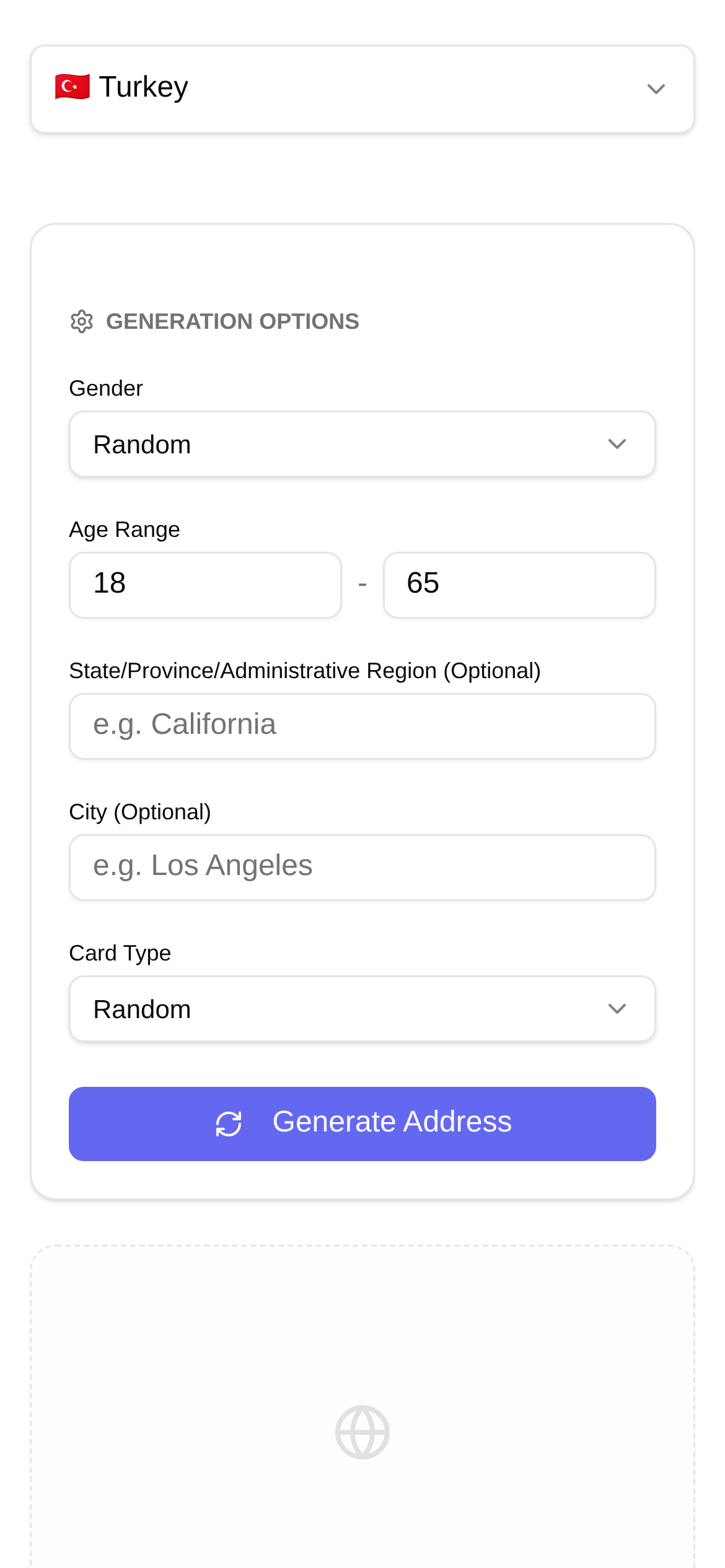
Have you ever experienced this frustrating moment: you're excitedly registering on a foreign website, only to be stopped cold by a prompt asking you to "Please enter a Turkey address"? Or maybe you're an app developer pulling your hair out trying to find bulk Turkey address test data? Don't be surprised—in this digital age, a seemingly "fake" Turkey address might be much more useful than you think. Today, let's talk about why you might need one and how to use it safely and smartly.
Scenario 1: Development and Testing—No More Data Headaches
For those of us in software development and testing, reliable test data is the cornerstone of a stable project. Especially when your application needs to handle international address information—like Turkey, which has a relatively unique address format—relying on manual entry is slow, error-prone, and can ultimately skew your test results. In times like these, having a handy tool can save you a lot of hassle.
What exactly does this tool do?
The little helper I'm recommending today is the Turkey Address Generator. It quickly generates random data that strictly follows Turkish address formatting rules. From street names and building numbers to cities, provinces, and even zip codes, every detail is perfectly arranged. Whether you need to generate a single address or a massive batch, it handles the job effortlessly, saving significant time during development and testing.
Here are a few examples of where it can be used:
- E-commerce Internationalization Testing: Simulate the entire checkout process for a Turkish user to check for bugs in address entry and logistics routing.
- GIS (Geographic Information System) Development: Generate massive amounts of Turkish address data to test map loading and address analysis modules.
- Filling Data Gaps: In the early stages of a project, if you don't have real data yet, use it to fill placeholders and get the system up and running.
Scenario 2: Privacy Protection—Keep Your Real Information Safe
Online privacy is becoming increasingly important. Sometimes, during non-critical registration or verification steps, entering your real address increases the risk of data leaks. Especially for websites or services you aren't entirely sure about, using a virtual address is a great way to protect your real information.
How to use a virtual address safely?
- Non-essential Registrations: If you just want to try out a Turkish website or service without involving shopping, finance, or legal responsibilities, registering with a generated address is perfect.
- Anonymous Surveys and Feedback: Some survey or feedback forms require an address, but you might not want to reveal your identity. A virtual address comes in handy here.
- Avoiding Spam and Harassment: Some websites use your registration info for targeted marketing. Using a virtual address effectively reduces these unwanted interruptions.
A special reminder here: Remember, virtual addresses should only be used in non-critical situations that do not involve legal liabilities. For scenarios involving finance, law, or package delivery that require real identities and addresses, you must honestly provide your actual information. Misusing virtual addresses can lead to service suspension, legal trouble, or even financial loss, so please be careful.
How to Use It: A Quick Guide to the Turkey Address Generator
Using this Turkey Address Generator couldn't be easier. Even beginners can master it in no time:
- Open the Tool Page: Simply enter
https://www.toolkk.com/tools/random-turkey-address-generatorin your browser to go directly to the Turkey Address Generator page. - Click the "Generate" Button: There is usually a highly visible "Generate" button on the page. With a single click, the system instantly provides you with a complete set of Turkish address information.
- Copy the Required Information: The generated address is displayed clearly. You can copy the street name, city, or zip code individually. Some tools also thoughtfully provide a one-click option to copy all the information, which is very convenient.
Turkey Address Generator Tutorial: To be honest, this tool barely needs a tutorial; the interface is completely self-explanatory. If you want to generate addresses in bulk, just glance over the page to see if there are related options or instructions.
Frequently Asked Questions (FAQ):
-
Q: Are the generated addresses real? A: The generated addresses are random combinations that comply with Turkish address formatting standards, but they do not represent actual, real-world locations. Their main purpose is for testing, development, and privacy protection. You cannot use them to receive packages.
-
Q: Who is this tool for? A: It is highly suitable for developers, QA engineers, companies conducting internationalization testing, privacy-conscious users, and anyone who needs Turkish address data for simulation or placeholder purposes.
-
Q: Will the generator save my information? A: Legitimate address generation tools (like the one recommended here) typically do not collect or save any user information. They generate data instantly based on algorithms, and it disappears once you're done, ensuring strict privacy protection.
-
Q: What makes it stand out compared to similar tools? A: The advantage of this Turkey Address Generator is that its generated address structures closely match actual local formats in Turkey. The data is comprehensive, it's easy to use, the interface is clean and simple, and it's completely free to use without registration.
-
Q: Are there legal risks to using a fake address? A: As emphasized earlier, using them in non-critical scenarios without legal liabilities generally carries no legal risk. However, if you intentionally provide false information in situations involving legal responsibilities, financial transactions, or package delivery that require a real identity, you may face legal consequences. Therefore, please use it cautiously and comply with local laws and regulations.
Summary:
A seemingly inconspicuous "virtual address" can play an unexpectedly huge role in certain specific situations. Whether you want to improve development and testing efficiency or better protect your personal privacy, understanding and utilizing these tools can make our digital lives more convenient and secure. Remember, the tool itself is neutral; the key lies in how smartly we use it.