

Tool Interface Preview
Actual Cash Value (ACV) Calculator
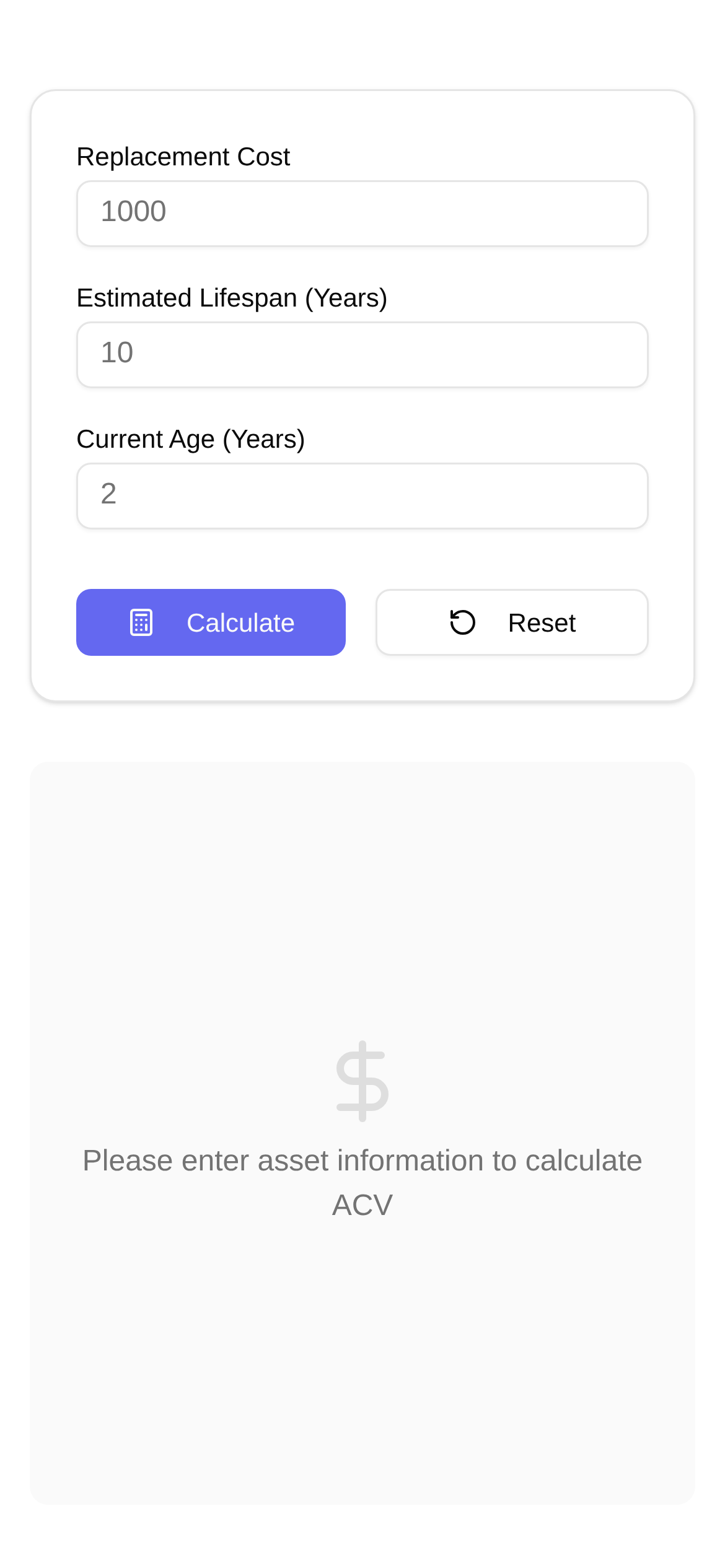
Hey everyone! If you've ever dealt with an insurance company, you've probably heard the term "Actual Cash Value" (ACV). Whenever you hear it, do you feel completely lost and wonder what on earth it means? How does it relate to the original price you paid? And how exactly should it be calculated so you don't lose out? Don't worry, today I'm going to demystify ACV and share a super handy tool so you'll never have to stress about valuations again.
ACV: The "Unspoken Rule" of Insurance Claims
Simply put, ACV is how much your item is worth "right now" if it gets damaged or stolen. It takes into account factors like how long you've used it and its level of wear and tear. This is completely different from "Replacement Cost." Replacement Cost is how much it would cost to buy a brand-new, identical item today. ACV, on the other hand, takes that brand-new price and subtracts the depreciation from your usage. So, if you have a five-year-old TV that originally cost $1,000, expecting the insurance company to pay you $1,000 is wishful thinking. The insurance company will "discount" it based on its age and wear.
So how is ACV actually calculated? The most common and straightforward formula is:
ACV = Replacement Cost - Depreciation
For depreciation, they usually look at how long the item is expected to last (expected lifespan) and how long you've already used it (current age). This is why we often feel our items are "undervalued" during a claim—because the insurance company pays out based on the discounted ACV.
ACV Isn't Just for Insurance Claims: Other Times It Comes in Handy!
Actually, accurately calculating ACV is useful for much more than just insurance claims. You might need it in the following situations:
- Insurance Claims (This is the big one!): Whether it's a house, car, phone, or other belongings, if you face a fire, theft, earthquake, or other unexpected events, insurance companies pay out based on ACV. Understanding ACV gives you confidence when negotiating with the insurance company, preventing you from being led by the nose and blindly accepting an unreasonable settlement.
- Asset Valuation: When taking inventory of household assets, dividing an estate, or selling used items, ACV is a crucial reference. It helps you objectively understand how much these items are currently worth.
- Financial Planning: Knowing the current value (ACV) of your various assets helps you get a more comprehensive picture of your financial situation, allowing you to make more informed decisions about future investments or major purchases.
- Tax Reporting: In some cases, asset depreciation and ACV are tied to tax filing. Especially for businesses, accurately calculating depreciation is a major part of financial reporting.
Practical Tutorial: A Step-by-Step Guide to Calculating ACV with Our Tool!
Alright, now let me introduce a fantastic online tool—the Actual Cash Value (ACV) Calculator. This tool is amazing: you just enter the replacement cost, expected lifespan, and current age, and it quickly calculates the actual cash value of your asset, saving you the headache of doing the math yourself.
How do you use it? Follow me step by step:
- Open the tool: Click this link https://www.toolkk.com/tools/acv-calculator to access the "Actual Cash Value (ACV) Calculator" page.
- Enter Replacement Cost: In the "Replacement Cost" field, enter how much it would cost today to buy a brand-new, identical item. For example, if your broken TV would cost $500 to replace with a brand-new one of the same brand and model, enter 500.
- Enter Expected Lifespan: In the "Expected Lifespan" field, enter how many years this type of item generally lasts. You can find this in the product manual, check industry standards, or estimate based on experience. For a TV, the expected lifespan might be 8 years.
- Enter Current Age: In the "Current Age" field, enter how long you've already used the item. For example, if you've had your TV for 3 years, enter 3.
- Click Calculate: Once all the information is filled in, click the "Calculate" button, and the tool will instantly give you the item's Actual Cash Value (ACV).
Let's look at an example:
Suppose you accidentally broke your laptop, which originally cost $800. Today, buying a brand-new laptop with similar specs costs $700 (this is the replacement cost). Based on experience, laptops generally last 5 years (expected lifespan). You've used this laptop for 2 years (current age). So, you would enter the following into the calculator:
- Replacement Cost: 700
- Expected Lifespan: 5
- Current Age: 2
Click calculate, and you'll get the ACV of this laptop. This number is your key reference when negotiating a claim with the insurance company. If you were wondering "how to use the ACV Calculator," the steps above are the most detailed guide you'll need.
Common Questions About ACV Calculation
Q1: How do I know how long different items will last (expected lifespan)?
A1: The lifespan of different items varies wildly. You can try these methods:
- Check the manual: Some durable consumer goods will state their expected lifespan directly.
- Check industry standards: Cars, appliances, and similar items usually have a general industry-standard lifespan.
- Get a professional appraisal: If your item is particularly valuable or complex, it's best to consult a professional appraiser.
- Consult your insurance company: Sometimes, insurance companies provide their own approved list of expected asset lifespans.
Q2: What if I can't find the original purchase price (replacement cost)?
A2: If you can't find the original receipt, you can try:
- Check the current market: See how much a brand-new item of the same brand, model, and specs sells for today.
- Compare similar items: If your item is discontinued, find a substitute with similar functions, performance, and quality, and check its current price.
- Use a professional valuation service: Some agencies specialize in providing valuation services.
Q3: What's the difference between an ACV policy and a Replacement Cost policy?
A3: These are two different types of insurance payouts.
- ACV Policy: Pays out based on the actual cash value of your item, which is the value minus depreciation. Premiums for this type of insurance are generally cheaper.
- Replacement Cost Policy: Pays out based on what it costs to buy a brand-new, identical item today, without deducting depreciation. However, the premiums will be more expensive. If you have this type of policy, you'll receive a higher payout during a claim.
Q4: Can anyone use this ACV calculator?
A4: Absolutely! This tool is especially great for:
- Everyday consumers: People who need to file an insurance claim for household items or vehicles.
- Small business owners: Those who need to evaluate the value of office equipment or inventory.
- Accounting professionals: People calculating asset depreciation.
- Second-hand sellers: Anyone wanting to