

Tool Interface Preview
Pressure Unit Converter
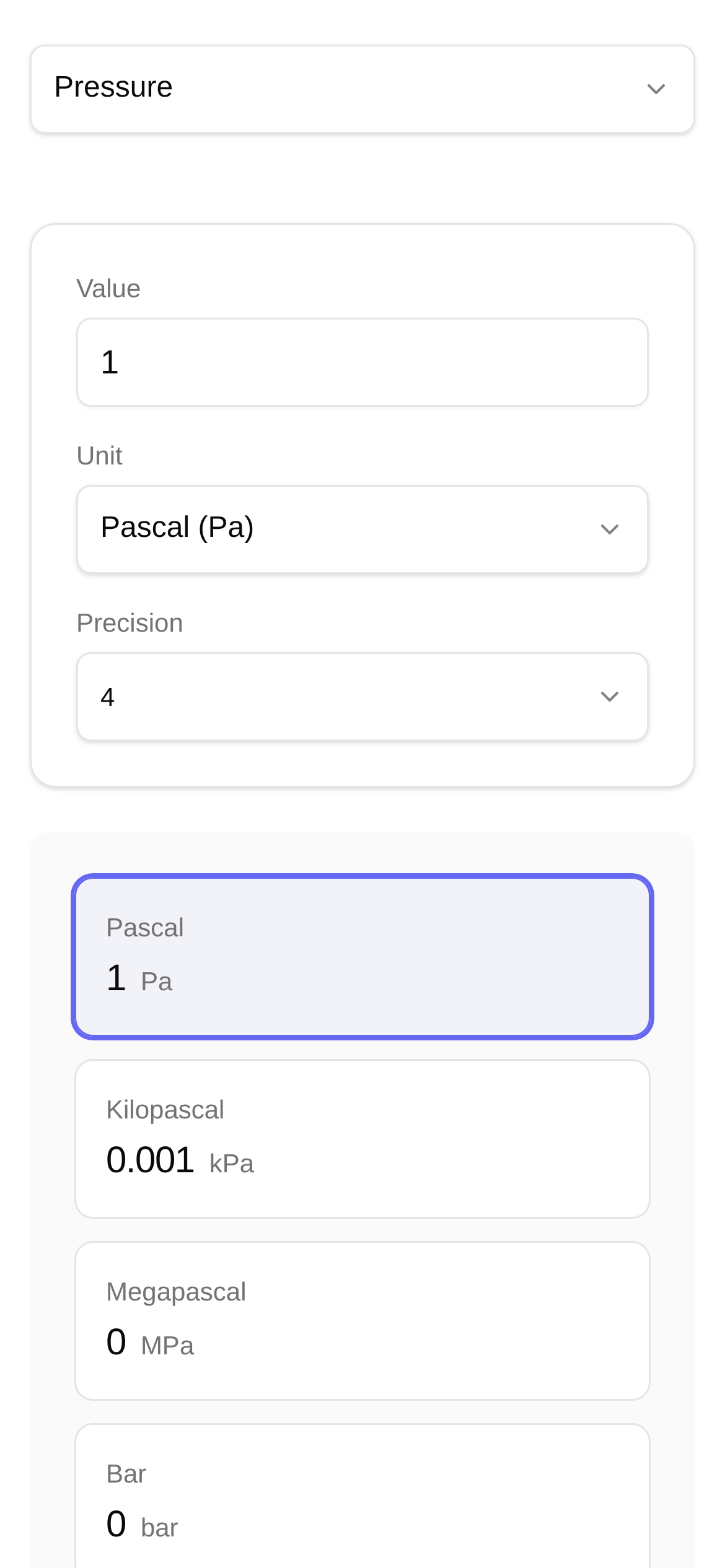
Pressure units are everywhere—in engineering, weather forecasting, scuba diving, and even our daily lives. Names like Pascal (Pa), pounds per square inch (psi), Bar, and standard atmosphere (Atm) might sound confusing, but they each have their specific applications and can be converted into one another. For beginners, unit conversion can definitely feel like a headache.
What Are the Different Pressure Units?
- Pascal (Pa): This is the standard SI unit of pressure. Simply put, it is one newton of force applied over one square meter. However, since it is quite small, we more commonly use kilopascals (kPa) or megapascals (MPa) in daily life. You'll frequently encounter it in scientific research and material strength calculations.
- Pounds per Square Inch (psi): This is an imperial unit widely used in the United States and some Commonwealth countries. You'll often see psi when inflating car tires or reading industrial pressure gauges. Therefore, understanding
how to use psiis quite important for car owners and engineers alike. - Bar: Although not an SI unit, it is extremely widely used. One bar is roughly equal to one standard atmosphere and is common in meteorology, dive depth measurement, and industrial fluid pressure. People often like to
compare bar and atm; they are numerically close, but their definitions differ slightly. - Standard Atmosphere (Atm): This unit was originally defined based on the average atmospheric pressure at sea level. It serves as a reference value, often used to express gas pressure or measure air pressure at high altitudes. If you're wondering
what the atm unit is, it's an empirical unit based on Earth's atmospheric pressure.
To accurately measure and calculate pressure, the first step is understanding the definitions of these units and their application scenarios. However, in practice, manually converting between different units is not only time-consuming but also prone to errors. This is where a handy **Pressure Unit Converter tool** becomes especially important.
Say Goodbye to Tedious Calculations: Get It Done Easily with a Pressure Unit Converter!
To make pressure unit conversion more convenient and accurate, I recommend using a Pressure Unit Converter tool. This powerful online tool can accurately convert between 14 different pressure units, including Pascal (Pa), psi, bar, and atm. Whether you are in engineering, meteorology, or scientific research, you will find it useful. It can easily handle complex engineering unit conversions or everyday air pressure unit conversions.
Tool link here: https://www.toolkk.com/tools/pressure-unit-converter
How to Use This Converter Tool? (Detailed Guide)
This pressure unit conversion tutorial is incredibly simple. Even if you are a beginner, you can get the hang of it quickly:
- Open the tool page: Click the link above to access the Pressure Unit Converter page.
- Select the input unit: In the "Input Unit" dropdown menu, find the pressure unit you currently have, such as "psi".
- Enter the value: Input the pressure value you want to convert, such as "32".
- Select the target unit: Go to the "Target Unit" dropdown menu and choose the unit you want to convert to, such as "bar".
- View the results: The tool will instantly display the converted result. For example, 32 psi will immediately show its corresponding bar value. Even better, it simultaneously displays results for other units like Pa and Atm, allowing you to easily
compare multiple pressure units.
Who is this tool for? Engineers, researchers, students, or anyone who needs to process pressure data can benefit from it. It greatly simplifies the complexity of pressure unit conversion and will skyrocket your work efficiency.
Frequently Asked Questions (FAQ)
- Q: Why should I use an online tool instead of a calculator?
A: Online tools support a more comprehensive range of units. You don't have to look up conversion factors yourself, and the calculation accuracy is high, which greatly reduces common mistakes found in
unit conversion precautions. Its advantages are especially obvious when you need to convert back and forth between several units. - Q: Besides Pa, psi, bar, and atm, what other units can this tool convert?
A: In addition to these, it supports many specific unit conversions like
MPa to kPa,kgf/cm² conversion, andmmHg to Pa, basically covering the vast majority of your daily and professional needs. - Q: Does this tool cost money? Are there any limitations? A: The Pressure Unit Converter is a free online tool. It requires no registration and has no usage limits. You can open and use it anytime, anywhere.
- Q: I often need to calculate car tire pressure. Is this tool convenient for that?
A: Absolutely! Car tire pressure is usually expressed in psi or bar. This tool can easily help you achieve
psi to barorbar to psiconversions, making it a great helper for car owners. You'll never have to worry about making mistakes intire pressure unit conversionagain.
Once you master the basics of pressure units and pair them with such a professional conversion tool, your work and life will become more efficient and accurate. The next time you encounter a pressure unit conversion problem, why not try this convenient Pressure Unit Converter tool!
Don't forget: The information and tools provided in this article are for reference only and cannot replace professional engineering or scientific advice. For critical applications, be sure to consult a professional.