

Tool Interface Preview
City Precipitation Forecast
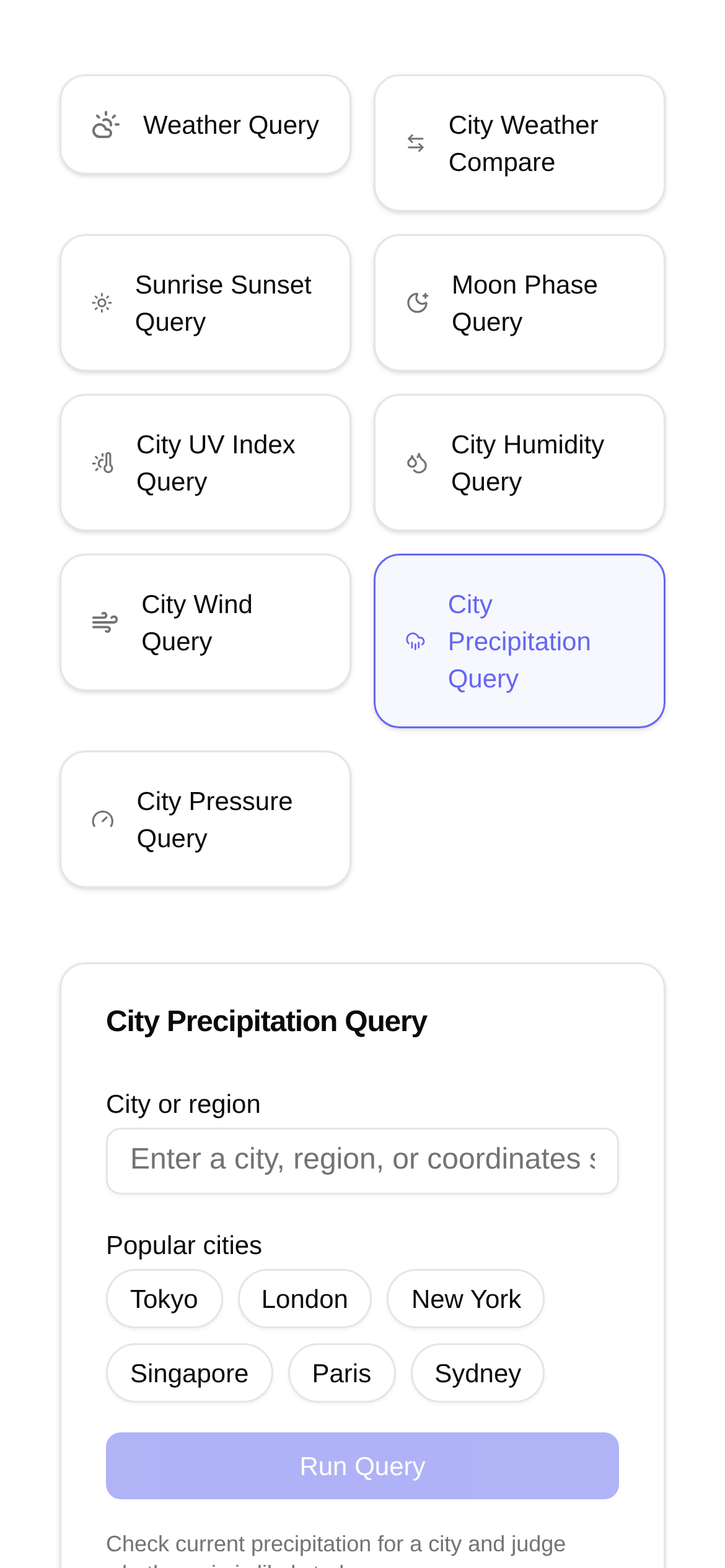
Hello everyone! Today, I want to share an incredibly practical tool, especially for those who, like me, are always worrying about the weather and planning their commutes or trips.
As we all know, city weather—especially rain—has a huge impact on our daily lives and work. Frustrating traffic jams on rainy days, clothes that won't dry, canceled outdoor plans... Most of these headaches happen because we don't have timely or accurate precipitation information.
So, how can you check the most accurate city precipitation forecast? Specifically, is there a "magic tool" for getting hour-by-hour data for the next 24 hours? Don't worry, today I'm uncovering a hidden gem for you!
Feature Breakdown: Know Exactly When the Rain Will Hit
There are plenty of weather forecast tools on the market, but those offering "24-hour hourly precipitation data" are either rare or require downloading a bulky app. The tool I'm introducing today—the City Precipitation Forecast—stands out because it can accurately check the hourly precipitation data for all prefecture-level and above cities in China for the next 24 hours.
What does this mean? It means that for the next day, you'll know exactly what time it will rain, how heavy it will be, and the probability of precipitation in your current or destination city. This is far more detailed and practical than vague forecasts like "cloudy turning to showers"!
The precipitation data for this tool is reportedly based on multi-source data fusion and algorithm optimization, aiming to provide the most realistic rain forecasts possible. Whether it's light rain, moderate rain, heavy rain, showers, or thunderstorms, it clearly maps out the hourly trends. So, if you're wondering "how to check the most accurate city rain forecast," I think this tool provides an excellent answer.
Who Can Benefit from This Detailed Precipitation Data?
So, who is this "City Precipitation Forecast" for, and in what scenarios is it useful? Its applications are actually quite broad:
- Daily Commuters: Take a quick look before heading out to see if it will rain in the next few hours, so you can decide whether to grab an umbrella or wear rain boots, avoiding a messy commute.
- Outdoor Enthusiasts: Whether you're running, cycling, hiking, picnicking, or camping, knowing the hourly rain forecast in advance helps you schedule better and keeps the rain from ruining your fun.
- Logistics and Transportation Workers: Truck drivers and couriers can adjust routes and delivery times based on the rain forecast to ensure cargo safety and improve efficiency.
- Farmers and Agricultural Workers: Farmers can use the precipitation forecast to reasonably schedule watering, fertilizing, and other fieldwork for better harvests.
- Travel Planners: When planning an itinerary, checking the destination's rain forecast helps you pick the best days and times to travel for a more enjoyable trip.
- Construction Project Managers: For weather-sensitive industries like construction, using this "24-hour hourly precipitation data guide" can effectively mitigate the impact of rain on project schedules.
In short, as long as you live in a prefecture-level city or above in China and need accurate information about upcoming rain, this tool will definitely be a great helper.
How to Use: Check Clearly in Just a Few Clicks
The interface of this tool is designed to be extremely clean, making it easy to use even for beginners. Here is a step-by-step guide on how to use the "City Precipitation Forecast Tool":
- Open the Tool: Click this link to access it: https://www.toolkk.com/tools/city-precipitation-query.
- Enter the City Name: There is a search box in the middle of the page. Just type in the name of the city you want to check, such as "Shanghai," "Beijing," or "Guangzhou."
- Click Search: After entering the city name, click the "Search" button next to it, or simply press Enter.
- View the Results: The system will quickly display the hourly precipitation data for that city over the next 24 hours. This is usually shown in a chart or list format, including the probability of rain and the amount of rainfall for each hour. You can see at a glance when the rain will start, when it will stop, and how heavy it will be.
The whole process takes less than 10 seconds—it's incredibly fast. So, if you were wondering "how to use the city precipitation forecast," I'm sure you've got it completely figured out now!
A Few Tips and Things to Note
- How often is the data updated? The data in this tool is updated in real-time. When checking, it's best to refresh the page to ensure you're seeing the latest information. If you notice slight differences compared to other tools, that's normal—different data sources and models can have minor variations, but the overall trends and key information will be largely consistent.
- Is it accurate? Although it provides hourly forecasts, weather prediction inherently carries some uncertainty. This is especially true for severe convective weather (like thunderstorms), where localized precipitation is harder to forecast. Therefore, we recommend checking one last time before you head out.
- Which cities can be checked? Currently, it supports all prefecture-level and above cities in China. If the city you are searching for is not covered, the system will notify you.
- Can I use it on my phone? Absolutely! The tool's page is fully responsive in mobile browsers, allowing you to check the weather anytime, anywhere.
Final Thoughts
Having access to accurate city precipitation forecasts can truly save us a lot of trouble and add peace of mind to our daily lives. With its user-friendly interface and precise data, this City Precipitation Forecast tool is undoubtedly the ultimate solution for anyone wondering "how to check the most accurate city rain forecast." I hope today's "24-hour hourly precipitation data guide" has been helpful to you. Bookmark it now and share it with your friends!
A quick disclaimer: The tool introduced today is intended as a supplementary weather forecast query tool. The precipitation data it provides updates dynamically based on actual meteorological conditions. Ultimately, you should always rely on real-time alerts issued by official meteorological departments. Please consult multiple sources before heading out to ensure safety first!