

Tool Interface Preview
Noise Detection
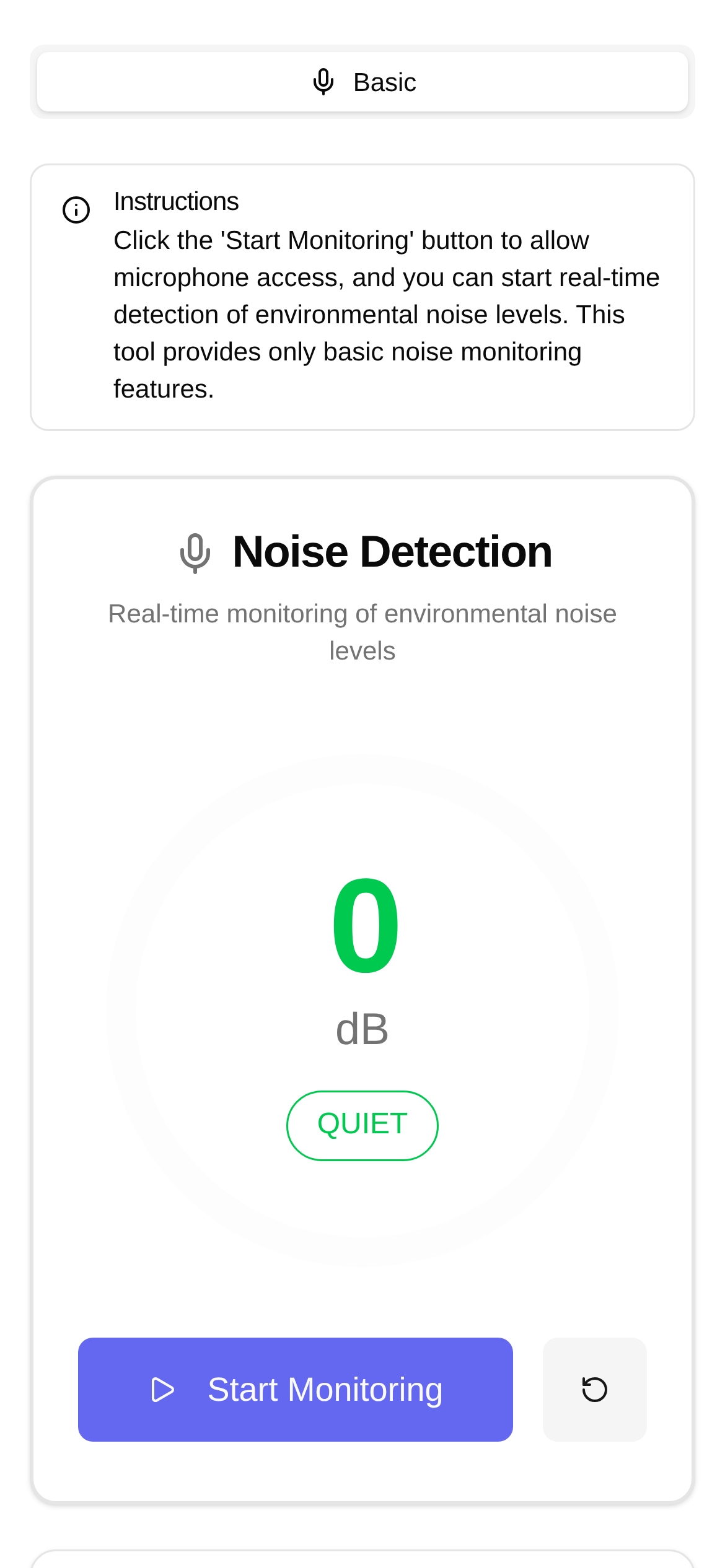
Haven't we all been there? The neighbor's drill buzzing, the downstairs neighbor partying at midnight, or the endless clacking of keyboards in the office—it can drive you crazy. Honestly, constantly being immersed in a high-noise environment doesn't just tank your productivity and ruin your sleep; over time, it can quietly damage your hearing. So, how do you know exactly how loud your daily environment is? Today, let's talk about how to measure noise at home or in the office yourself, using the simplest and completely free method.
Why Should We Measure Noise?
Some might think noise detection is only for professionals and has nothing to do with us regular folks. But actually, understanding the noise levels of our surroundings is quite important for everyone. Here are a few examples:
- Check your home comfort: Is your bedroom too noisy, affecting your sleep quality? Is the background noise in the living room a bit too loud and distracting?
- Optimize your workspace: In an open-plan office, is the constant chatter making it impossible to focus? How good is the soundproofing in the conference room?
- Protect your hearing: If you spend long periods in environments above 85 decibels, the risk of hearing damage increases significantly. Knowing the noise level early allows you to take protective measures before it's too late.
- Resolve noise disputes: If you ever get into an argument with a neighbor or property management over noise, having actual data gives you a much stronger case, and you can stand your ground.
In the past, measuring noise meant getting a professional decibel meter, and those devices aren't cheap. But now, thanks to smartphones and handy online tools, we can easily handle basic noise detection ourselves. It's incredibly convenient.
What's a Good Noise Detection Tool?
Today, I want to share a highly convenient online tool with you—Noise Detection.
Tool Name: Noise Detection Access it here: https://www.toolkk.com/tools/noise-detection In short: It uses your device's microphone to measure environmental decibel levels in real-time, helping you evaluate noise levels at home, in the office, or in public spaces, while reminding you to protect your hearing.
Who is this tool best for?
- The general public: Anyone who cares about their hearing health and wants to know how loud their daily environment really is.
- Remote workers: Those looking to improve their home office environment, reduce noise interference, and work more efficiently.
- Parents: Those who want to check if their children's study or sleep areas are quiet enough and suitable for them.
- Renters and homebuyers: When viewing a property, you can quickly test the surrounding noise levels to know what to expect.
- In short, anyone sensitive to environmental noise or wanting a basic understanding of their acoustic surroundings will find this tool very useful.
How Do You Use the "Noise Detection" Tool?
Using this noise detection tool couldn't be simpler. You don't even need to download an app; it works right in your browser. Let me walk you through exactly how to use it.
- Open the tool page: Grab your phone, tablet, or computer, and enter this URL in your browser: https://www.toolkk.com/tools/noise-detection.
- Grant microphone access: The first time you use it, your browser will pop up asking for permission to access your microphone. Remember, you must click "Allow" or "Grant"; otherwise, it can't collect sound and won't be able to measure the noise.
- Start measuring: Once authorized, the page will immediately display the decibel value of your current environment. You can walk around with your device and test different areas at different times to see how the data changes.
- Understand the results: The tool will continuously update the decibel reading and sometimes provide reference ranges to help you understand what the current noise level actually means—whether it's acceptable or a bit too loud.
A few things to keep in mind while measuring:
- Stay quiet: Try not to speak, move around, or make other noises while measuring. The sounds you make will be picked up by the microphone and skew the results.
- Position the device well: Place your phone or computer in the area you want to test, and make absolutely sure the microphone isn't blocked, or the decibel reading will be artificially low.
- Measure multiple times: Noise levels can fluctuate. It's recommended to test multiple times during different periods—like day and night, or peak and off-peak hours. Take an average or record the maximum value for a more comprehensive and accurate picture.
- Eliminate other sounds: Ensure your device isn't playing music, videos, or emitting other sounds during the test, as this will affect accuracy and prevent you from measuring pure environmental noise.
FAQ and Advanced Tips
Q1: Is the noise data from a phone actually accurate? Can it compare to a professional decibel meter?
A: To be honest, the sensitivity and calibration of a phone microphone can't compete with a professional decibel meter, so there will be some margin of error. However, if you just want a daily noise assessment—like judging whether an environment is "quiet," "normal," or "noisy"—this noise detection tool is more than enough. It provides a relatively accurate reference value to help you understand general noise levels and trends. But if you need highly precise data or legal-grade evidence, you'll still need professional equipment and agencies.
Q2: How many decibels is considered harmful?
A: The World Health Organization (WHO) suggests that long-term exposure to noise environments above 70 decibels can affect your hearing. If the noise exceeds 85 decibels, even short-term exposure can cause hearing damage. In places like your home, noise should ideally be below 45 decibels; when sleeping, environmental noise should be under 30 decibels to ensure high-quality rest.
Q3: Besides decibels, are there other noise metrics I should care about?
A: Aside from the instantaneous decibel value, noise assessments also look at A-weighted sound pressure levels (dBA, which closer matches human hearing) and equivalent continuous sound levels (Leq, the average noise level over a period of time). However, for average users, using noise detection to check the dBA value is generally enough for daily needs. No need to overcomplicate things.
Q4: What should I do if the noise level is too high?
A: Don't panic, try these methods:
- Protect yourself: The most direct approach is wearing earplugs or noise-canceling headphones to physically block out some of the noise.
- Improve the environment: Using soundproofing materials (like soundproof windows or thick curtains to absorb sound), rearranging furniture, or adding indoor plants can all help absorb noise.
- Communicate: Try talking to the source of the noise. Politely express your concerns and see if you can find a solution together.
- Seek help: If you can't resolve it yourself, you can report the situation to property management, the HOA, or environmental protection departments for assistance.
Q5: Where is this "Noise Detection" tool best used?
A: It's particularly well-suited for measuring noise in these places:
- At home: Check the noise levels in your bedroom, living room, or study to see if they meet your ideal quietness standards.
- In the office: Assess noise interference in open-plan offices, at your desk, or in conference rooms to help improve the work environment.
- Preliminary checks in public spaces: Test the noise in cafes, libraries, or malls to gauge comfort levels and see if they are suitable for a long stay.
After reading the introduction above, I believe you now know how to measure noise yourself at home or in the office. Protecting your ears is incredibly important, so start by understanding the noise around you! Open Noise Detection right now and test the decibel level of your surroundings!
A quick reminder: The information in this article is for reference only and cannot replace professional hearing health assessments or expert advice on noise control. If you experience hearing discomfort or if noise problems are severe enough to disrupt your normal life, you should consult a professional doctor or environmental agency for a proper diagnosis and solution.