

Tool Interface Preview
Death Anniversary Calculator
Hello everyone.
Birth, aging, illness, and death are inevitable parts of life. When a loved one passes away, beyond the piercing grief, we often wonder: how can we best remember them? Where should we place this heavy longing? This is a common dilemma many of us face. A deceased person's death anniversary is more than just a date; it holds our deep affection for the departed and serves as a continuation of family culture and emotion. Today, let's talk about death anniversaries—the traditions and significance behind them, and how to accurately calculate the dates to properly observe them.
Why Are Death Anniversaries So Important to Us?
In traditional Chinese culture, a death anniversary is not just a simple remembrance of the departed. It acts as an invisible bond between us and the deceased, as well as among family members. You may have heard terms like the "first anniversary," "third anniversary," or even the "fifth" and "tenth" anniversaries. These are all significant milestones. These dates provide an opportunity for families to gather, recall memories of the deceased, express grief, and place their emotions. Whether through memorial ceremonies, tomb-sweeping, or simply sitting down for a family dinner, we not only comfort the souls of our departed loved ones but also bring family members closer together through shared memories, passing down good family traditions from generation to generation.
First Anniversary (also known as "Xiao Xiang" or "Dui Nian"): This refers to the first full year after a loved one's passing. It is the first major memorial day, marking the end of a specific stage of the mourning period, though the deep sorrow remains in our hearts.
Third Anniversary (also known as "Da Xiang"): According to old traditions, the mourning period officially comes to an end after three years. The third-anniversary memorial is generally more solemn than the first. Family members will try their best to gather and hold a more formal ceremony. This serves as a final comfort to the deceased and carries blessings for the future of the living.
As for subsequent anniversaries, such as the fifth or tenth, these often evolve into internal family remembrance activities. The purpose is simple: to never forget the departed and to properly pass on the family spirit.
How to Calculate a Death Anniversary: Don't Confuse the Gregorian and Lunar Calendars!
To be honest, calculating death anniversaries can be quite a headache, especially when it involves converting between the lunar and Gregorian calendars. Most traditional memorial customs follow the lunar calendar, but in modern daily life, the Gregorian calendar is used much more frequently. This makes calculations a bit complicated, and if you're not careful, you might miss an important memorial date.
Common questions people encounter include:
- How to convert between lunar and Gregorian calendars? The Gregorian date of a loved one's passing is fixed, but its corresponding lunar date changes every year. How can we accurately calculate the lunar death anniversary each year?
- What happens during a leap month? If the lunar month of a loved one's passing happens to fall on a leap month, how exactly should the anniversary be calculated?
- Are there differences in local customs? In some local customs, the anniversary calculation might be moved forward or backward by a few days. How can these specific regional practices be accommodated?
To help you solve these headache-inducing problems, I highly recommend a very practical online tool: the Death Anniversary Calculator.
Death Anniversary Calculator: Your Memorial Day Assistant
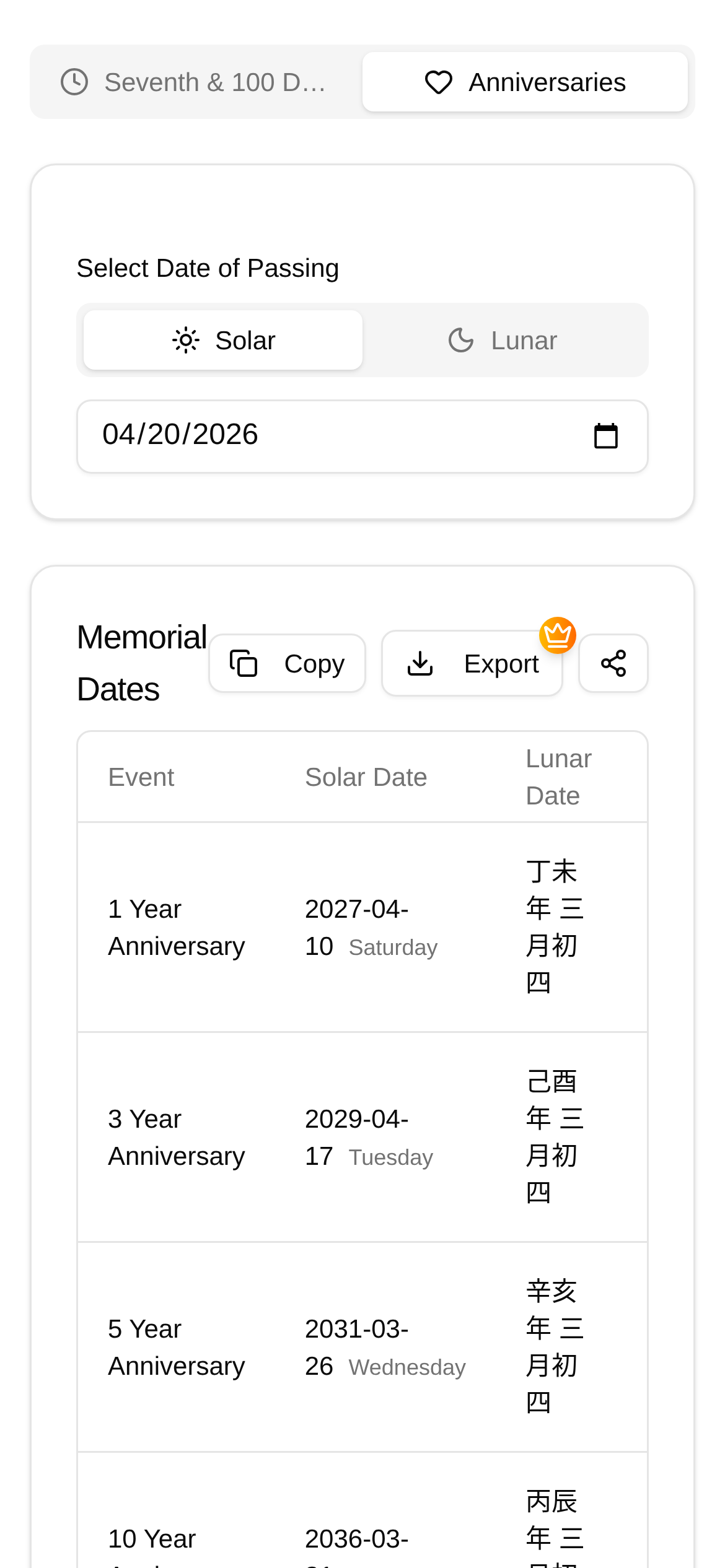
This Death Anniversary Calculator (https://www.toolkk.com/tools/death-anniversary-calculator) is a free and easy-to-use online tool specifically designed to help people solve the difficulties of calculating death anniversaries. You only need to enter some basic information, and it will automatically calculate the Gregorian and lunar dates for important milestones like the first and third anniversaries. It's incredibly convenient, so you never have to worry about scheduling memorial activities again.
What features does it have?
- Smart Anniversary Calculation: Simply enter the date of your loved one's passing (either Gregorian or lunar), and the tool will instantly calculate the Gregorian and lunar dates for important memorials, such as the first, third, and fifth anniversaries. This is a huge help for those who aren't familiar with lunar calendar calculations.
- Two-Way Calendar Conversion: Whether you enter a Gregorian or lunar date, the tool can accurately recognize and convert it, ensuring the calculation results are spot on.
- Simple Interface and Easy Operation: The tool's interface is designed to be highly intuitive. There's no learning curve, making it easy even for elderly family members to use.
- Who is it for?: This tool is