

Tool Interface Preview
Random Chinese Name Generator
Have you ever wondered how Chinese names actually work? Does the family name come first or last? Why do some names sound incredibly poetic while others are highly unique? Understanding Chinese naming conventions is like finding a master key to cultural exchange. Today, we'll dive into Chinese naming culture in a way that's easy for beginners to understand. Plus, we'll introduce a fantastic tool to help you out!
Chinese Naming Culture: The Basics
Let's start with the basic structure of Chinese names and the culture behind them. Unlike the Western convention of "first name, last name," Chinese names typically follow a "last name, first name" format. For example, in the name "Li Ming," "Li" is the surname (family name) and "Ming" is the given name.
- The Origins of Surnames: Chinese surnames have a long history, with many tracing their roots back to ancient tribes, fiefdoms, official titles, or even totems. A surname doesn't just represent the continuation of a bloodline; it carries the glory and historical narratives of ancestors. Common surnames like "Zhang," "Wang," "Li," and "Zhao" all have their own unique origins.
- Meaning and Expectations in Given Names: Naming a child is a process filled with parental hopes. A name might harbor wishes for good virtues (like "De" for virtue or "Xian" for wisdom), blessings for a successful career (like "Peng" or "Cheng"), desires for health and longevity (like "Kang" or "Shou"), or even reflect the season or region of birth. Therefore, a Chinese name is often a miniature story worth savoring.
- Single-Character vs. Double-Character Names: Common Chinese names can have a single-character given name (like "Li Bai") or a double-character given name (like "Du Fu"). Nowadays, double-character names are more prevalent because they can express richer meanings and help avoid name duplication.
Struggling with Naming? Try This Hidden Gem!
Now that you know the basics, have you ever run into these frustrations:
- Writing a novel and racking your brain for a Chinese name that fits the historical background and sounds unique?
- Developing a game and feeling overwhelmed by the workload of generating numerous player nicknames in various styles?
- Wanting to choose a meaningful and beautiful Chinese name for yourself or your child, but feeling completely out of inspiration?
Don't worry! Today, I highly recommend a super useful, free online tool: the Random Chinese Name Generator. It can easily solve all these naming dilemmas!
Random Chinese Name Generator: Features and Use Cases
The tool's URL is: https://www.toolkk.com/tools/random-chinese-name-generator.
Why It's Great:
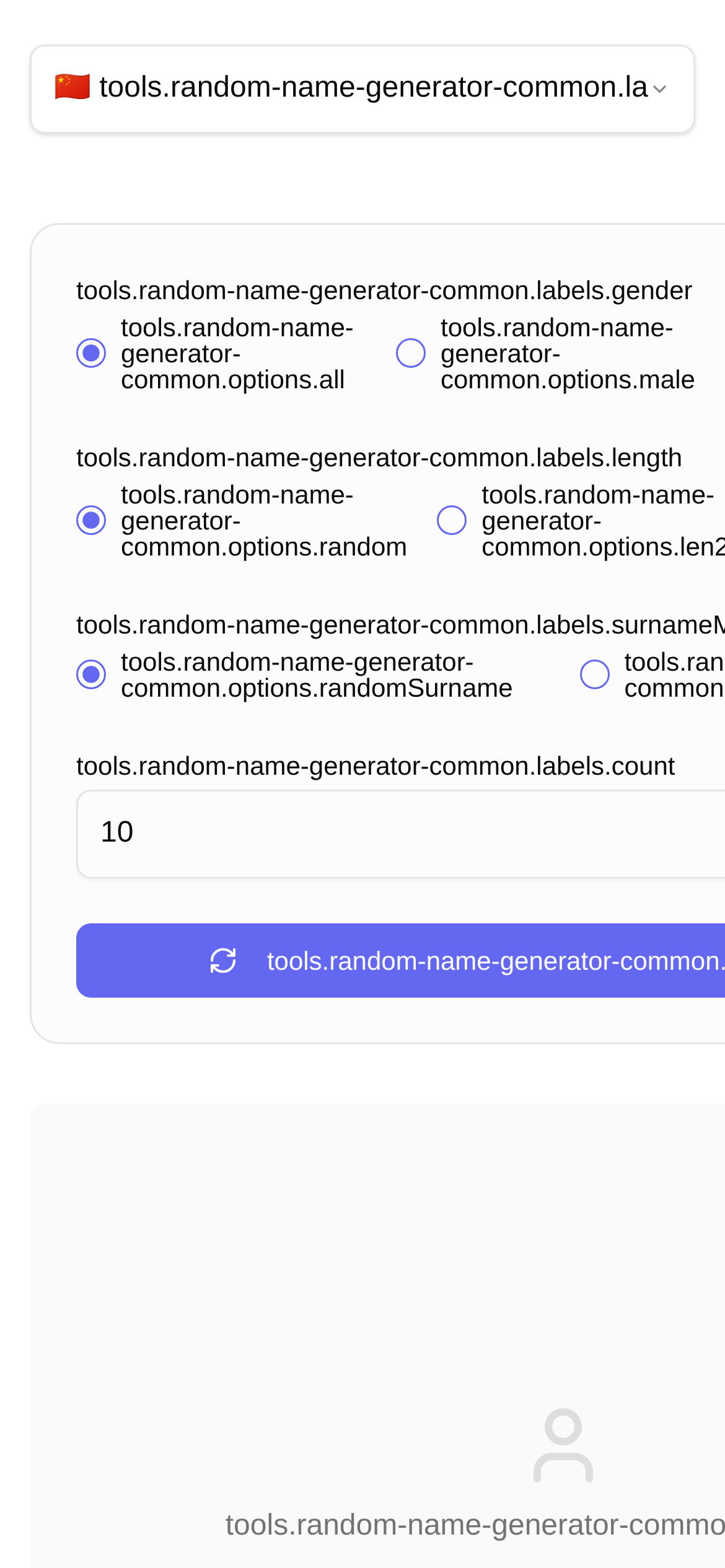
- Customizable Filters: You can filter by gender (male, female, random), name length (single-character, double-character, random), and surname (specific or random). This ensures the generated names perfectly match your requirements.
- Fast Batch Generation: It doesn't just generate one or two names; it supports batch generation. This is incredibly convenient for scenarios requiring large amounts of data, like naming game NPCs or conducting big data analysis.
- Explore Meanings Independently: While the tool doesn't directly provide the meaning of the names, the generated names are mostly combinations of common characters. You can use a dictionary to look up these characters and uncover deeper cultural connotations.
Where You Can Use It:
- Writing Novels/Scripts: Quickly name characters with different personalities and backgrounds, ensuring the names are unique and fit the character profiles. For instance, if you're writing about an ancient female warrior, selecting "female" and "double-character" might generate classic, poetic names like "Lin Wan'er" or "Liu Ruyan."
- Designing Game Characters: Generate large batches of player or NPC names across different genders to significantly boost your workflow. If you're a game designer or indie developer, this tool is a lifesaver.
- Learning Chinese: As a Chinese learner, generating various names helps you familiarize yourself with character combinations and pronunciations, deepening your understanding of Chinese naming culture.
- Naming Reference: For new parents looking to name their child, or anyone wanting a Chinese name but lacking ideas, this tool provides abundant inspiration and alternatives.
Step-by-Step Guide: How to Use the Random Chinese Name Generator
The interface is extremely straightforward, making it easy to use even for beginners. Here is a detailed step-by-step guide:
- Open the Tool: First, click this link to access the tool page: https://www.toolkk.com/tools/random-chinese-name-generator.
- Select Gender: Find the "Gender" option on the page. You can choose "Random," "Male," or "Female."
- Select Name Length: Next, choose whether you want a single-character or double-character given name, or select "Random."
- Specify a Surname (Optional): If you want the generated names to have a specific surname, type it into the "Surname" input box. If left blank, the system will generate random surnames. This is a standout feature that caters to specific surname requirements.
- Choose Quantity: Enter the number of names you want to generate. This tool supports "batch generation of Chinese names," making it highly efficient.
- Click "Generate": Once all conditions are set, click the "Generate" button. The system will instantly display a list of Chinese names that meet your criteria below.
Pro Tip: If you aren't satisfied with the generated names, simply click the "Generate" button a few more times until you find one you like. Try it out—you'll find this tool can bring you quite a few pleasant surprises.
Frequently Asked Questions and Things to Note
When using tools like the Random Chinese Name Generator, you might have some questions or need to be aware of certain details. I've compiled some common questions and answers to help you use it better.
Q1: Are the generated names real?
A1: The tool generates names based on combinations of common Chinese characters and surnames. While most names align with Chinese naming conventions, it cannot guarantee that every single name belongs to a real person in real life. Its primary purpose is to provide inspiration and options, not to perfectly simulate real population data.
Q2: How can I tell if a name sounds good or has a good meaning?
A2: This largely depends on your personal preference and cultural background. You can read the generated name aloud to see if it sounds harmonious. You can also look up the meanings of the characters to see if they meet your expectations. For example, if you want a positive and uplifting name for a character and see characters like "Jie" (outstanding) or "Hao" (heroic), you'll naturally associate them with those meanings.
Q3: Can this tool be used for commercial purposes?
A3: As a free online tool, it can generally be used for both non-profit and commercial projects. However, for specific usage scopes, it's best to check the tool website's disclaimer or terms of service. Compared to other paid tools, its free nature is a significant advantage.
Q4: Are there any "precautions for use"?
A4: Keep the following points in mind when using the tool:
- Cultural Sensitivity: Although the generated names are usually neutral, some names might carry special meanings in specific contexts. If you plan to use a name in a formal setting, it's best to double-check it.
- Risk of Duplication: Batch-generated names, especially those using common character combinations, have a higher chance of being identical to existing names. If you need a truly unique name, you might need to make some modifications.
- For Reference Only: Naming is a process full of cultural nuance and personal emotion; the tool is merely an assistant. The final decision should be based on your specific needs and cultural understanding.
Final Thoughts
Through today's introduction, I believe you now have a deeper understanding of Chinese naming culture and have mastered this excellent Random Chinese Name Generator. Whether you want to name a novel character, design a game nickname, or simply explore the mysteries of Chinese naming, this tool will be a great helper. Go ahead and give it a try to kickstart your Chinese naming journey!
Disclaimer: All content in this article regarding naming culture and tool usage is for reference only and cannot replace professional linguistic or cultural research advice. If you are officially naming someone, be sure to consider the actual circumstances and choose carefully.