

Tool Interface Preview
Actual Cash Value (ACV) Calculator
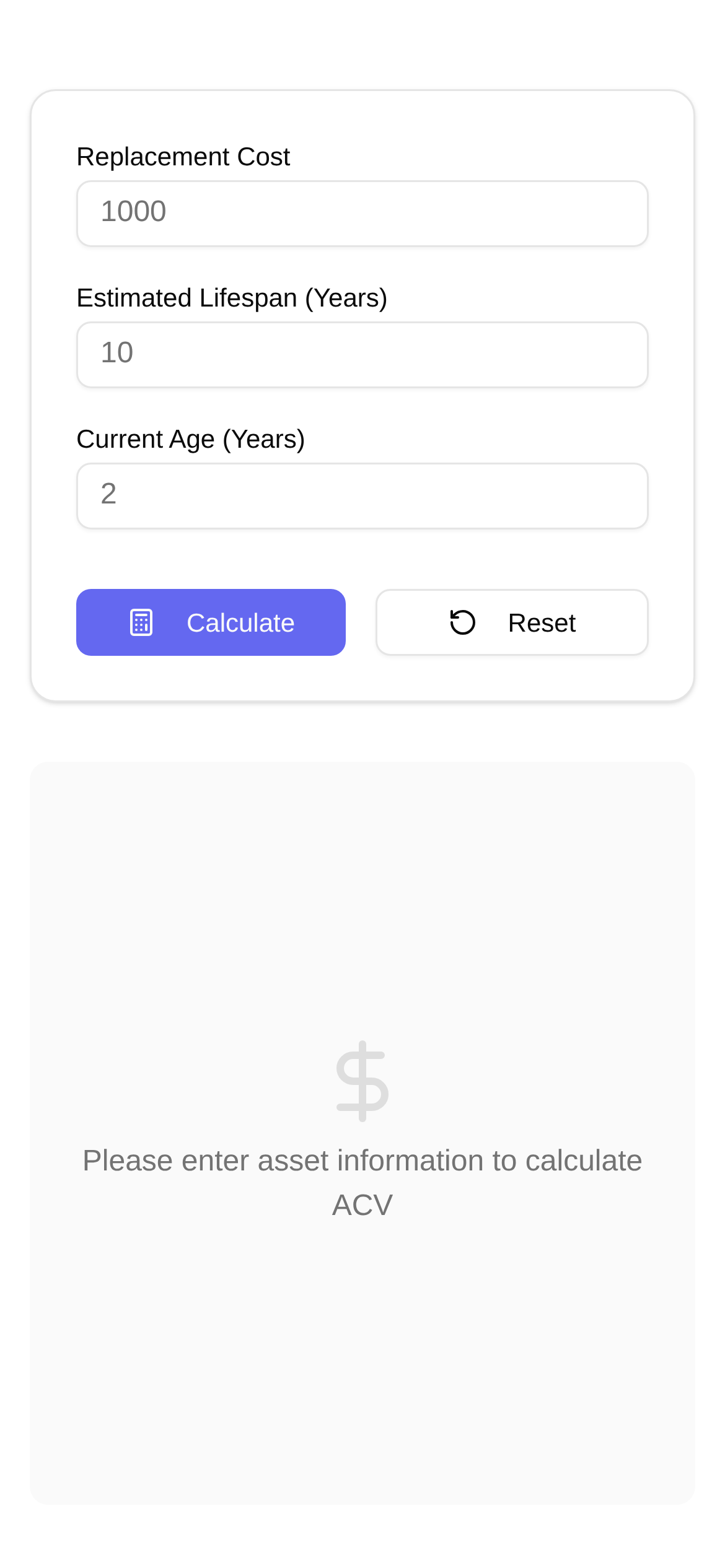
When a home appliance suddenly breaks down and needs to be scrapped, does it frustrate you when the insurance company says they will only pay the depreciated value? Or maybe you want to sell furniture you bought a few years ago, but you're struggling to figure out a fair asking price? Honestly, evaluating the value of household belongings—especially when depreciation is involved—can be a real headache. So, how do you calculate it reasonably? Are there any simple, easy-to-use tools to help us quickly handle these complex calculations?
Say Goodbye to "Guesswork": It's Time to Understand Asset Depreciation
When estimating the value of household items, many people either rely on their gut feeling or simply refer to the original purchase price. But in reality, the value of an item starts shrinking the moment you bring it home—this is what we commonly call "depreciation." Depreciation isn't just about an item getting old or worn out; market supply and demand, as well as technological upgrades, also affect it. Understanding the essence of depreciation can help us make more reliable judgments during insurance claims, second-hand sales, or taking inventory of our household assets.
There are many ways to calculate depreciation, such as straight-line depreciation and accelerated depreciation. But for average households, the most crucial thing is how to quickly and accurately estimate the "Actual Cash Value" (ACV) of an item. ACV refers to the market value of an item when it is damaged or lost, factoring in depreciation. This is especially important when dealing with insurance companies, as it directly determines how much compensation you will ultimately receive.
ACV Calculator: The "Secret Weapon" for Household Asset Evaluation
To make calculating household asset depreciation less of a hassle, some excellent tools have emerged on the market. Among them, the Actual Cash Value (ACV) Calculator is a particularly convenient online tool. Based on the replacement cost, expected lifespan, and current age of the item you input, it quickly calculates the depreciated value. This tool is incredibly user-friendly for everyday households—you don't need to understand complex financial concepts to use it effortlessly.
What Makes This ACV Calculator So Great?
- Super simple to use: Its interface is very clean. You only need to input a few key numbers, such as how much it costs to buy the item brand new today, how many years it is expected to last, and how many years you have already used it. The results are generated instantly. There's no need to apply complex formulas yourself; it makes everything clear at a glance.
- Highly versatile: This tool not only helps you estimate the resale value of old appliances and furniture, but it also helps you understand why depreciation is deducted during insurance claims. It even comes in handy when dividing assets or taking inventory of household items. It truly is a multi-purpose tool!
- Scientific modeling: It uses mainstream depreciation calculation logic, so the results are highly reasonable, giving you peace of mind when using it as a reference.
How to Use the ACV Calculator: A Step-by-Step Guide
- Open the webpage: Enter the URL in your browser to access the Actual Cash Value (ACV) Calculator page.
- Enter the replacement cost: Fill in how much it would cost to buy the item brand new today. For example, if a refrigerator you bought three years ago breaks down, check the current market price for a new refrigerator of the same model or similar specs, and enter that price.
- Enter the expected lifespan: Estimate how long the item should normally last. For a refrigerator, you might expect it to last 10 years; for a good quality sofa, maybe 8 years.
- Enter the current age: Tell the calculator how long you have already used the item. For instance, if you bought your refrigerator 3 years ago, enter 3.
- Click calculate: Boom! The result appears instantly, showing you the Actual Cash Value (ACV) of the item.
With just these few simple steps, you can quickly figure out exactly how much your household items have depreciated. This is far more accurate than guessing or relying on random quotes from second-hand marketplaces, giving you a solid baseline.
Who Needs an ACV Calculator? What Problems Can It Solve?
- Insurance claims: If your home appliances or furniture are damaged and you need to file a claim, insurance companies typically pay based on the item's ACV. By calculating it in advance with the ACV Calculator, you'll know what to expect, making communication with the insurance company smoother and less prone to disputes. This is the most typical example of "using an ACV calculator for insurance claims."
- Second-hand sales: Want to sell an old phone, computer, or piece of furniture, but aren't sure how to price it? The ACV Calculator gives you a reference price based on depreciation, giving you more confidence in "second-hand item valuation" and preventing you from selling too cheap or pricing it so high that no one buys it.
- Household asset inventory: When taking an annual inventory of your household assets, you need to value each item. The ACV Calculator helps you quickly complete a "household property inventory valuation," giving you a clear understanding of your actual household wealth.
- Estate planning: If estate division or gifting is involved and a fair valuation of items is required, the ACV Calculator can also provide a relatively objective reference.
- Pure curiosity: Just want to know how much that old TV or sofa you've used for years is still worth? The ACV Calculator can also satisfy your curiosity for "old item value lookups."
How Does the ACV Calculator Compare to Other Valuation Methods? (Pros and Caveats)
Compared to hiring an offline appraiser or purely relying on asking around for market prices, the biggest advantage of the ACV Calculator is that it saves time, effort, and money. It provides a standardized depreciation calculation model, reducing errors caused by human judgment. However, there are a few things to keep in mind:
- Replacement cost must be accurate: The closer the replacement cost you enter is to the actual current market price, the more accurate the result will be. Therefore, it's recommended to compare a few sources to find accurate "replacement cost lookup" information.
- Expected lifespan must be reasonable: The lifespan of items varies greatly depending on the brand and quality. When filling this out, you can check the product manual, industry standards, or ask an expert. This is key to "determining the expected lifespan of an item."
- May not apply to certain special items: For things like antiques or collectibles, their value is driven more by rarity than simple physical depreciation. Therefore, the ACV Calculator may not be suitable for evaluating these types of items; they require more professional "specialty item valuation."
An important quick reminder: The ACV Calculator and related information discussed here are for reference only and should not be taken as professional advice. If you are dealing with major financial decisions, insurance claims, or legal matters, be sure to consult a professional appraiser, lawyer, or relevant institution.
In short, the Actual Cash Value (ACV) Calculator is a truly practical tool. It helps us better understand and calculate the depreciated value of household belongings. Whether you want to know how much your old stuff is worth, plan to sell second-hand goods, or need to handle an insurance claim, it can be a great helper. Give it a try now, and stop being in the dark about the value of your "old household items"!