

Tool Interface Preview
Random Phone Number Generator
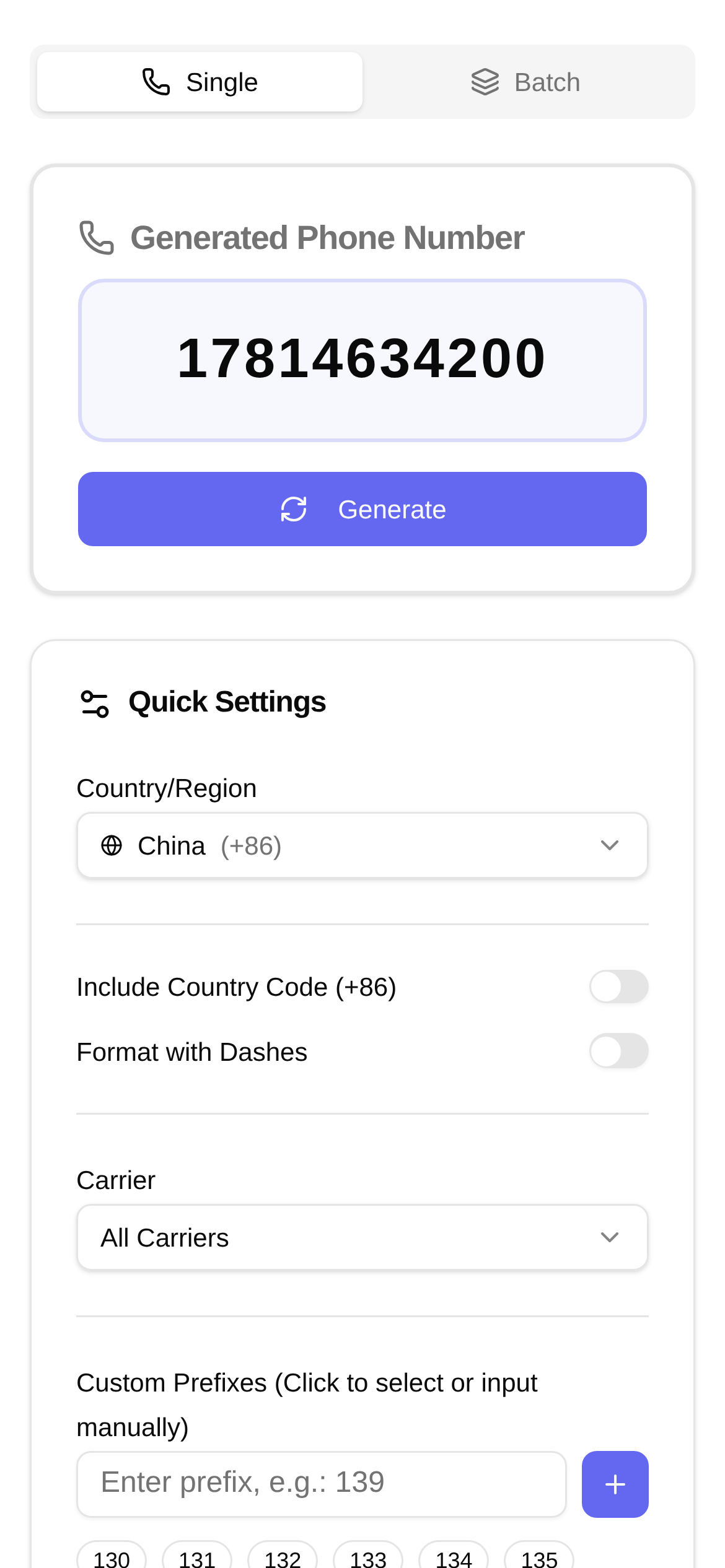
Hey everyone, as developers or QA veterans, have you ever run into this scenario: you need to test an SMS verification code, run through a user registration flow, or just mock a massive amount of user data, and you find yourself scrambling for "real" phone numbers?
You might just make up a few numbers, dig out your spare SIM cards, or even borrow a phone from a colleague to save time. But have you ever stopped to think that these "quick fixes" might be hiding some serious pitfalls?
1. Testing with Real Phone Numbers? The Risks Are Huge!
Think about it: what if your testing environment is sitting on a pile of real phone numbers? If that data accidentally leaks, the owners of those numbers could be bombarded with spam texts and robocalls, or worse, face severe privacy breaches. For your company, this is much worse than just bad PR—it could violate data protection regulations and result in massive fines. Furthermore, if you use real numbers for large-scale automated testing, you might trigger carrier anti-spam mechanisms and get those numbers permanently blocked, bringing your testing to a grinding halt.
So, a very clear need emerges: we need a large volume of random, compliant "virtual" phone numbers specifically for testing and development. This isn't just nice to have; it's an absolute necessity!
2. Why Do You Need a Random Phone Number Generator?
This is where a reliable random phone number generator comes in handy. It helps you completely bypass the minefields mentioned above while significantly boosting your development and testing efficiency, as well as data security.
For example, today I want to recommend a tool I find incredibly useful: this Random Phone Number Generator (https://www.toolkk.com/tools/random-phone-number-generator). It doesn't just spit out a random string of digits; it's highly optimized for real-world development and testing scenarios.
This tool is genuinely practical in terms of features:
Its core feature is the ability to generate random phone numbers based on your specific needs—targeting specific countries, carriers, or even specific number prefixes. What does this mean for you? You can mock phone numbers from different regions and user demographics, ensuring your application runs smoothly even in edge cases. Whether you need numbers from major Chinese carriers like China Mobile, China Unicom, and China Telecom, or specific carriers from other countries, it has you covered.
3. What Are the Use Cases for Random Phone Numbers? A Great Partner for Dev and QA!
- SMS Verification Code Testing: This is absolutely number one. Your app needs to send verification codes to confirm user identities, right? You can't use your own phone to receive them every time. With random phone numbers, you can simulate massive user registration, login, and password recovery flows to thoroughly verify your SMS sending and receiving logic.
- Registration/Login Module Stress Testing: When you need to simulate thousands of users registering or logging in simultaneously, typing phone numbers manually is a pipe dream. Batch generating random phone numbers instantly enables you to run stress tests and see if your system can handle high concurrency.
- Data Mocking and Seeding: When a project just starts and the database is completely empty, what do you do? You need some realistic-looking user data to test features. A random phone number is a crucial field in any user table. Pair it with other random data (like names and emails), and you can generate a complete test dataset in minutes.
- Carrier Compatibility Testing